Margaret Thatcher: The Iron lady
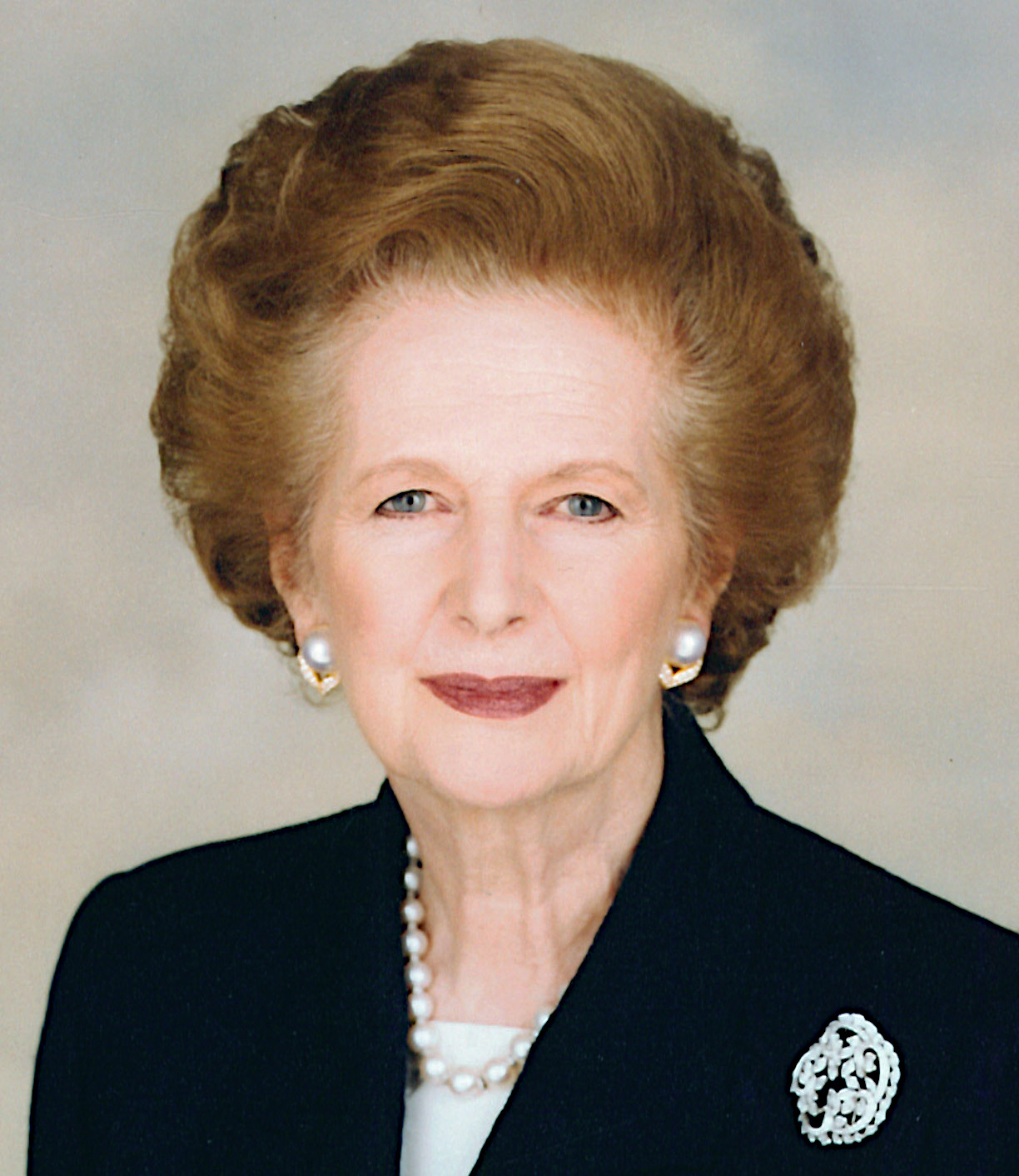
Margaret
Hilda Thatcher is a former British prime minister, the longest serving of the
20th century; she is also the only woman to have held the position. She was born in Grantham, Lincolnshire on the
13th October 1925. Margaret
Thatcher is best known for her strict conservative policies, which are known as
Thatcherism. During her time in the office, Margaret Thatcher was dubbed the
“Iron Lady” because she was strict with her policies and rules. She served from
1979 until 1990. She is also the
Baroness, Baroness Thatcher of Kesteven in the county of Lincolnshire; this
allows her to sit in the House of Lords.
Margaret Thatcher, through
out her political career has had both good and bad influences on Britain. But
it remains a fact that she has greatly influenced Britain and its politicians,
some of the more notable influences are on David Cameron and Tony Blair who both
used Thatcherism in their politics. While she was in office Margaret Thatcher
shaped every aspect of British politics, the economy, institutions and foreign
policy. One of her most important challenges and goals was to recover the
economy; she approached this challenge with striking energy and determination.
While apprehending this issue she became one of the founders, alongside Ronal
Regan, of a school of conservative conviction politics, this gained her a high
international profile, the highest for a British politician. During Margaret
Thatcher’s first term as prime minister, the government promised to reverse
Britain’s economic decline, in order to accomplish this some painful measures
were required. Direct taxes were cut, but the budget had to be balanced, this
meant that indirect taxes were increased. The economy was definitely in a
recession, inflation was rising and interest rates also had to be raised.
Finally the unemployment began going down from three million. Margaret Thatcher
gained support from the people with her decision on the Falkland war. She chose
to protect the countries national interest; instead of trying to diplomatically
solve the issue, she sent the countries task force. The Argentine attacked the Falkland
without any reason; therefore Margaret Thatcher refused to diplomatically solve
the issue, and wanted to regain the land that was her countries. The greatest
challenge was to come in the second term when the miner union went on a
yearlong strike, which was one of the longest and most violent in British
history, but the union was defeated which proved that Thatcher government was
strong and would last long. When she brought down the strike Margaret Thatcher
was protecting her countries national interest, which she always did, but this
often gained unpopularity with others. In1984 while the strike was still underway
the IRA (Irish Republican Army) attempted to murder Thatcher by bombing the
hotel she was staying at. But her re-forms and strict policies lead to the
improvement of the economy through the 1983-87. The government began selling
off its assets, privatization, and this lead to even further improvements in
the economy. Further on in her third term the economy boomed, and the interest
rated doubled. Her third term ended in 1990, and she didn’t win a forth term.
Even after 1990 she remained an important political figure, she gave lectures
and wrote several books. After having several small strokes in 2002 she
announced that she would retire. Her husband, Denis Thatcher died in 2003.
In my opinion Margaret Thatcher has had a very important political career
and has made many important changes and reform to the government at the time.
Most of the major changes in the government were related to economics and
foreign policies. Because Britain at the time was in an economic decline the
main focus and challenge was retrieving the once stable economy. Through
cutting the direct taxes, balancing the budget and shutting down unprofitable
business Margaret Thatcher managed to bring back the blossoming economy. Even
though she was often strict and made decision that hurt people on the short
term, it helped the economy and the people in the long run. Both critics and
supporter recognize the Thatcher period as a period of fundamental importance
to Britain.


No comments:
Post a Comment